Choosing between a condo, TIC, or co-op in Cow Hollow can feel like learning a new language. You want the right fit for your budget, lifestyle, and long-term plans, but the rules, financing, and resale factors are not the same. The good news is you do not need to guess. In this guide, you will learn how each ownership type works in District 7, what it means for your monthly costs and flexibility, and how to do smart due diligence before you write an offer. Let’s dive in.
What each ownership type means
Condominiums
A condo gives you fee-simple ownership of a specific unit plus a share of common areas. Your deed is recorded to a separate parcel, and the building is governed by an HOA with CC&Rs and bylaws. For more on ownership forms in California, the California Department of Real Estate offers helpful background.
What this means for you: you have a clear title to one unit, predictable HOA governance, and broad lender acceptance. You will pay monthly HOA dues and follow project rules that may cover pets, rentals, renovations, and use of common areas.
Tenancy in Common (TIC)
In a TIC, you own a fractional interest in the entire property, and a private TIC agreement allocates the exclusive use of your specific unit. The agreement also sets rules for expenses, maintenance, transfers, and dispute resolution. For plain-language explanations of co-ops, condos, and TICs, you can review consumer legal overviews at Nolo.
What this means for you: the purchase price can be lower than a comparable condo, but financing is more specialized and resale can be narrower. The strength and clarity of the TIC agreement are critical.
Cooperative (Co-op)
A co-op is ownership of shares in a corporation that owns the building. Your right to occupy a unit comes from a proprietary lease. Co-ops are far less common in San Francisco than condos or TICs, but you will still see them occasionally in older buildings.
What this means for you: expect board review of buyers and sublets, share-loan financing, and a more limited buyer pool on resale.
Day-to-day differences you will feel
- Title and control: A condo gives you a deed to a defined unit. A TIC gives you a deed to a fractional interest plus a contract for exclusive use. A co-op gives you shares and a lease, not a unit deed.
- Rules and governance: Condos have HOAs with CC&Rs and board-elected governance. TICs rely on a private contract among owners. Co-ops use a corporate board that often approves transfers and rentals.
- Monthly costs: All three may have regular assessments for operations and reserves. Confirm reserve studies, insurance coverage, and any current or pending special assessments.
- Resale and liquidity: Condos typically have the broadest buyer and lender pool, TICs can be less liquid, and co-ops are the most selective.
Financing in Cow Hollow
- Condos: Conventional loans are widely available. Lenders review HOA financials, reserves, litigation, owner-occupancy, and delinquency. FHA and VA options may be possible if the project meets eligibility criteria. FHA project rules are outlined by HUD.
- TICs: Some lenders finance TIC interests, but not all do. Underwriting depends on the TIC agreement and whether the building has a blanket mortgage. For an overview of how agencies view nonstandard ownership, see Fannie Mae guidance and confirm lender-specific policies.
- Co-ops: Financing usually takes the form of a share loan secured by your co-op shares. Lenders focus on building financials and bylaws, and availability is more limited than condos.
Tip: Before you fall in love with a unit, get preapproved for that specific ownership type. Ask the lender to review the HOA, TIC agreement, or co-op documents early.
Taxes, transfer costs, and insurance
- Property taxes: In California, a change of ownership typically triggers reassessment at current value under Prop 13. When a TIC converts to condos, recording new unit parcels often leads to reassessment of each unit. For parcel and assessment questions, consult the San Francisco Assessor-Recorder.
- Transfer tax: San Francisco has a local documentary transfer tax that varies by price tier. Budget for this when buying or selling. Current details are at the San Francisco Treasurer & Tax Collector.
- Insurance: Condo owners carry an HO-6 policy for interiors while the HOA covers the structure. TIC insurance varies by agreement and master policy. Co-ops typically insure the building at the corporate level while shareholders insure improvements and personal property. Confirm coverage, deductibles, and earthquake considerations.
Cow Hollow realities in District 7
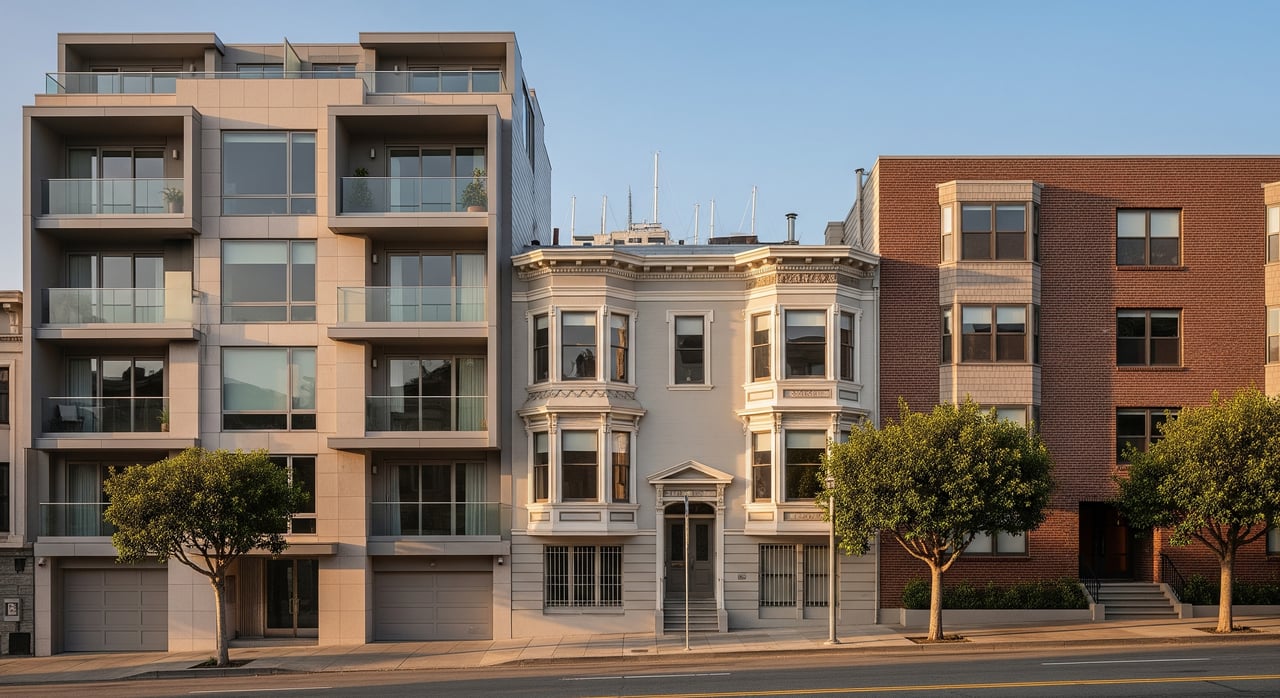
Cow Hollow features many pre-war and early-to-mid 20th century buildings alongside single-family homes. You are most likely to encounter condos and TICs, with co-ops appearing less often. Older buildings sometimes need seismic, plumbing, or electrical upgrades, which can impact monthly assessments, resale, and the feasibility of any future conversion from TIC to condo. If conversion is on your radar, start with the City’s process outlines at San Francisco Planning.
For price and inventory context, your best reference points are recent comparable sales for the same ownership type. Condos typically offer the cleanest comp set because units are separately mapped and assessed. TIC values can vary depending on building condition, agreement quality, financing options, and conversion potential.
Pros and cons at a glance
Condos
- Pros: Clear unit deed, broad buyer and lender pool, predictable HOA governance, potential for FHA/VA in eligible projects.
- Cons: HOA dues and special assessments, project rules on use and rentals, need to review reserves and any litigation.
TICs
- Pros: Often a lower entry price, ownership in desirable older buildings, possible long-term upside if conversion is feasible.
- Cons: Financing is more specialized, smaller buyer pool, agreement complexity, conversion requires time, money, and City approvals.
Co-ops
- Pros: Strong building-level control and management, sometimes lower price relative to comparable condos.
- Cons: Board approval of buyers and sublets, limited financing options, smaller resale audience.
Due diligence checklist for Cow Hollow buyers
Use this list to keep your process tight and low-stress.
- Ownership and title
- Condos: recorded deed, CC&Rs, bylaws, condominium plan, parcel map, recent assessment roll.
- TICs: recorded deeds, full TIC agreement, occupancy allocations, any blanket mortgage, easements, operating budget.
- Co-ops: proprietary lease, share certificate, corporate bylaws, board policies, financial statements.
- Financial health
- Budgets, reserve studies, meeting minutes, delinquency rates, insurance policies and deductibles, pending or recent special assessments, and any litigation.
- Building condition
- Code compliance, seismic work, roof, plumbing, electrical, pest history, façade and common area updates, and any required accessibility or energy upgrades.
- Financing fit
- Lender preapproval for the specific ownership type, sample loan terms, down payment, and rate assumptions tied to the HOA, TIC agreement, or co-op rules.
- Taxes and costs
- Property tax estimates with likely reassessment, San Francisco transfer tax range, and estimate of closing costs.
- Rental and short-term rental rules
- HOA, TIC, or co-op restrictions plus City registration and limits. Review City policies through the San Francisco Rent Board.
- Insurance and responsibilities
- Master policy coverage vs. owner obligations, earthquake options, and any unique exclusions.
Tips for sellers in District 7
- TIC sellers
- Provide the complete TIC agreement, clarify any blanket mortgage, and share lender references that have financed recent TIC sales. If conversion is possible, outline what has been done and what remains under City rules.
- Condo sellers
- Prepare a thorough HOA resale package: CC&Rs, bylaws, budgets, reserve study, insurance certificates, and any litigation or special assessment history.
- Co-op sellers
- Share board policies, approval procedures, building financials, and a list of standard buyer requirements. Being transparent about timelines and documentation helps keep deals on track.
Considering a TIC-to-condo conversion
If you are evaluating conversion potential, start with the City’s process and timeline. The San Francisco Planning Department outlines condominium conversion rules and tenant protections. These rules often include notice requirements, relocation assistance where applicable, and building upgrades. Tenant protections and rent control policies interact with conversions, so include a stop at the Rent Board in your research.
Key questions to ask:
- Is the building eligible given current occupancy and tenant history?
- What seismic, life-safety, or accessibility work is required?
- What is the expected cost and timeline, and how will expenses be shared?
- How will conversion affect property taxes for each unit after new parcels are recorded? The Assessor-Recorder provides guidance on reassessment scenarios.
Smart next steps
- Pull parcel and recorded documents from the San Francisco Assessor-Recorder to confirm ownership type.
- Request and review the full HOA, TIC, or co-op document set before you write an offer.
- Get preapproved with a lender that regularly finances your target ownership type. For policy context, check Fannie Mae and HUD, then confirm specifics with your lender.
- Map your closing costs, including San Francisco transfer tax via the Treasurer & Tax Collector.
- If conversion is part of your plan, study timelines and requirements at San Francisco Planning and confirm tenant-related rules with the Rent Board.
You do not need to navigate all of this alone. A local, senior-led team can connect the dots between ownership type, financing, taxes, and building history so your decision is confident and timely. If you are weighing condo vs TIC vs co-op in Cow Hollow, we are here to help you set a strategy, compare options, and move forward with clarity.
Ready to talk through your goals and next steps in District 7? Reach out to Sage Real Estate for local guidance and a clear plan.
FAQs
How do condos, TICs, and co-ops differ in Cow Hollow?
- Condos give you a deed to a unit with HOA governance, TICs split a building via fractional ownership and a private agreement, and co-ops grant shares plus a proprietary lease.
Is TIC financing available in San Francisco right now?
- Yes, but only some lenders offer TIC loans, and terms depend on the TIC agreement and whether a blanket mortgage exists; confirm with lenders familiar with TICs.
What should I check before buying a condo in District 7?
- Review CC&Rs, bylaws, budgets, reserve studies, insurance, meeting minutes, owner-occupancy, delinquency, and any litigation or special assessments.
Will my taxes change if a TIC converts to condos?
- Creating separate condo parcels commonly triggers reassessment at current value under Prop 13; the Assessor-Recorder can outline likely outcomes.
Do HOAs or TICs allow short-term rentals in Cow Hollow?
- Many do not; rules vary by project or agreement, and San Francisco enforces registration and restrictions through the Rent Board.
Where do I find official rules for condo conversions?