Choosing Between Noe Valley And Glen Park Homes
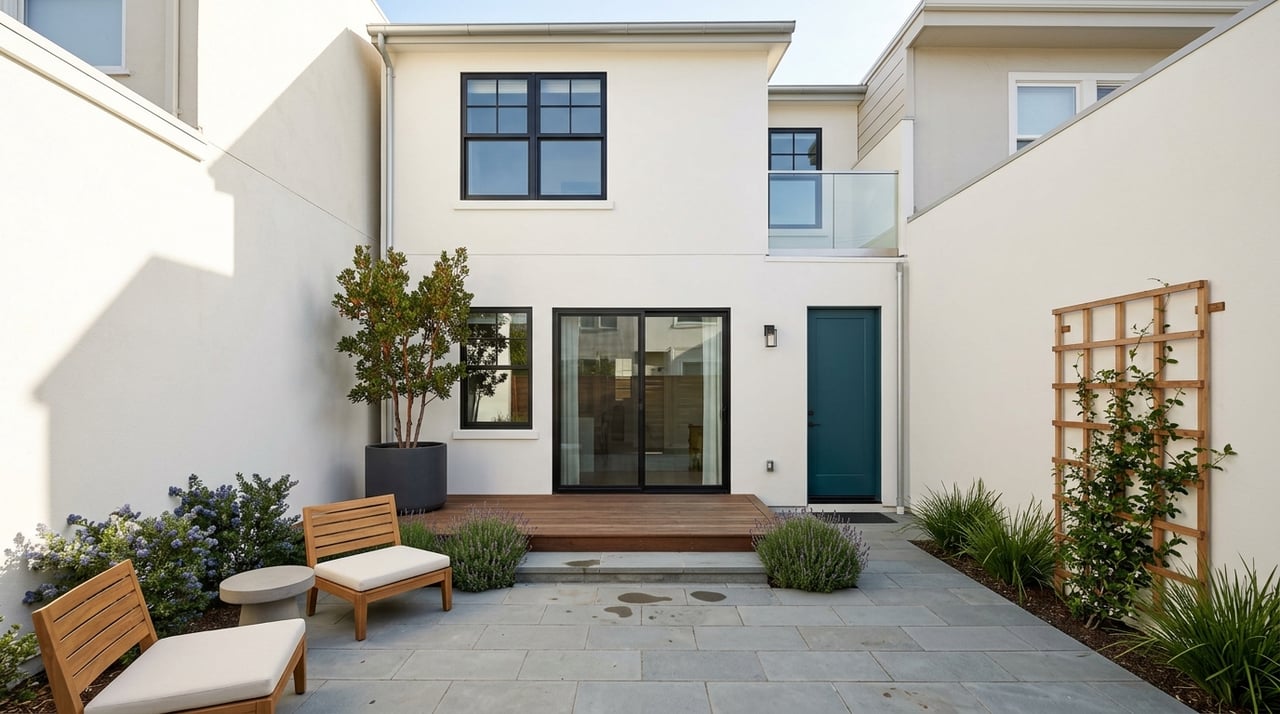
Trying to choose between Noe Valley and Glen Park? You are not alone. Both neighborhoods are well-known San Francisco options, but they offer different tradeoffs in price, housing type, commute style, and day-to-day routine. If you are weighing where your budget and lifestyle line up best, this guide will help you compare the facts and focus on what matters most. Let’s dive in.
If budget is one of your biggest filters, this is often the clearest place to begin. As of May 2026, the median sale price in Noe Valley was $2,349,210, while Glen Park came in at $1,937,848.
That puts Noe Valley about $411,362 higher, or roughly 21.2% more expensive than Glen Park. In simple terms, Noe Valley is typically the pricier choice, while Glen Park is often the more attainable option at current market levels.
Both neighborhoods are also highly competitive. Homes commonly sell in about two weeks and often receive multiple offers, so neither area should be viewed as a slow or easy market.
Noe Valley offers a broader mix of housing types. SF Planning ACS profiles show that 38% of the housing stock is single-family homes, and another 38% is made up of 2-to-4-unit buildings.
That mix can appeal to buyers who want more variety in the search process. Depending on your goals, you may find condos, flats, or smaller multi-unit options alongside classic San Francisco homes.
Glen Park has a stronger single-family profile. According to SF Planning ACS profiles, 60% of its housing stock is single-family, while 28% is in 2-to-4-unit buildings.
For many buyers, that means Glen Park may offer a more straightforward path if your search is centered on detached or single-family-style living. It can also feel like a better fit if you want slightly more house-for-the-money.
The two neighborhoods also differ in the age of their housing. Noe Valley’s median year built is 1926, while Glen Park’s is 1950.
That suggests Noe Valley generally has older housing stock, while Glen Park skews somewhat newer. In practice, that can shape everything from floor plans to renovation history to the overall character of the homes you tour.
Noe Valley has broad Muni access. SFMTA lists service from the J Church, K Ingleside, M Ocean View, 14 Mission and 14R, 24 Divisadero, 35 Eureka, 36 Teresita, 48 Quintara and 24th Street, 49 Van Ness and Mission, 52 Excelsior, and more.
SFMTA also identifies the 24th St./Noe parking lot, which reinforces 24th Street as a central access point. Redfin transportation scores reflect that convenience, with Noe Valley scoring 94 for Walk, 75 for Transit, and 75 for Bike.
If you picture your routine centered around errands on foot, neighborhood retail, and Muni connections, Noe Valley has a strong case. It tends to support a main-street lifestyle well.
Glen Park also has solid transit options through the J Church, 14 Mission and 14R, 23 Monterey, 24 Divisadero, 35 Eureka, 36 Teresita, 44 O'Shaughnessy, 49 Van Ness and Mission, and 52 Excelsior. What sets it apart is Glen Park Station.
Located at Diamond and Bosworth, Glen Park Station connects to four BART lines. BART also notes that the station includes 55 parking spaces and bike amenities.
For buyers who want a rail-first commute, Glen Park is usually the stronger fit. Redfin’s scores support that tradeoff too, with Glen Park at 83 for Walk, 80 for Transit, and 66 for Bike.
Public descriptions of Noe Valley emphasize a residential neighborhood anchored by a bustling main street. Noe Valley Town Square is a central gathering space and hosts farmers’ markets and community events, according to San Francisco Recreation and Parks.
That creates a routine that often feels centered on local shopping, casual walking, and community gathering. If you want a neighborhood that revolves around a lively commercial corridor, Noe Valley may feel like the more natural match.
San Francisco’s Glen Park community plan describes the area as having a small-town village character with active storefronts and walkable access to neighborhood stores, transit, parks, and community facilities. It also highlights strong ties to Glen Canyon Park.
Glen Canyon Park adds a major outdoor element to daily life. The park includes trails, a recreation center, ball fields, a playground, tennis courts, and 60 acres of urban canyon habitat.
If your ideal routine includes easy park access and a compact commercial core near transit, Glen Park may check more boxes. Its rhythm is often less about a larger retail corridor and more about a village setting with immediate open-space access.
Both neighborhoods are largely built out, and that matters if you are thinking beyond this year’s search. In 2024, Noe Valley recorded a net gain of 14 housing units, while Glen Park recorded a net gain of just 1, according to San Francisco housing inventory data.
That is a useful signal that future supply is limited in both places. For buyers, it helps explain why inventory can stay tight and why competition can remain active even when your search is highly targeted.
Choosing between Noe Valley and Glen Park is less about naming a winner and more about matching the neighborhood to your priorities. Both are competitive, established San Francisco neighborhoods, but they reward different goals.
If you are serious about both neighborhoods, the next step is to compare them through your real search criteria, not just broad impressions. That means looking at your budget, commute pattern, preferred home type, and how you want daily life to feel once you move in.
In San Francisco, small neighborhood differences can have a big impact on how a home works for you over time. A focused, block-by-block approach can make the decision much clearer, especially in competitive areas where inventory is limited and timing matters.
Whether you are buying in Noe Valley or Glen Park, local context matters. The team at Sage Real Estate helps San Francisco buyers navigate competitive neighborhoods with clear guidance, thoughtful strategy, and detailed market insight.
Stay up to date on the latest real estate trends.
You’ve got questions and we can’t wait to answer them.