Fillmore Street's Year-Round Business and Music Scene
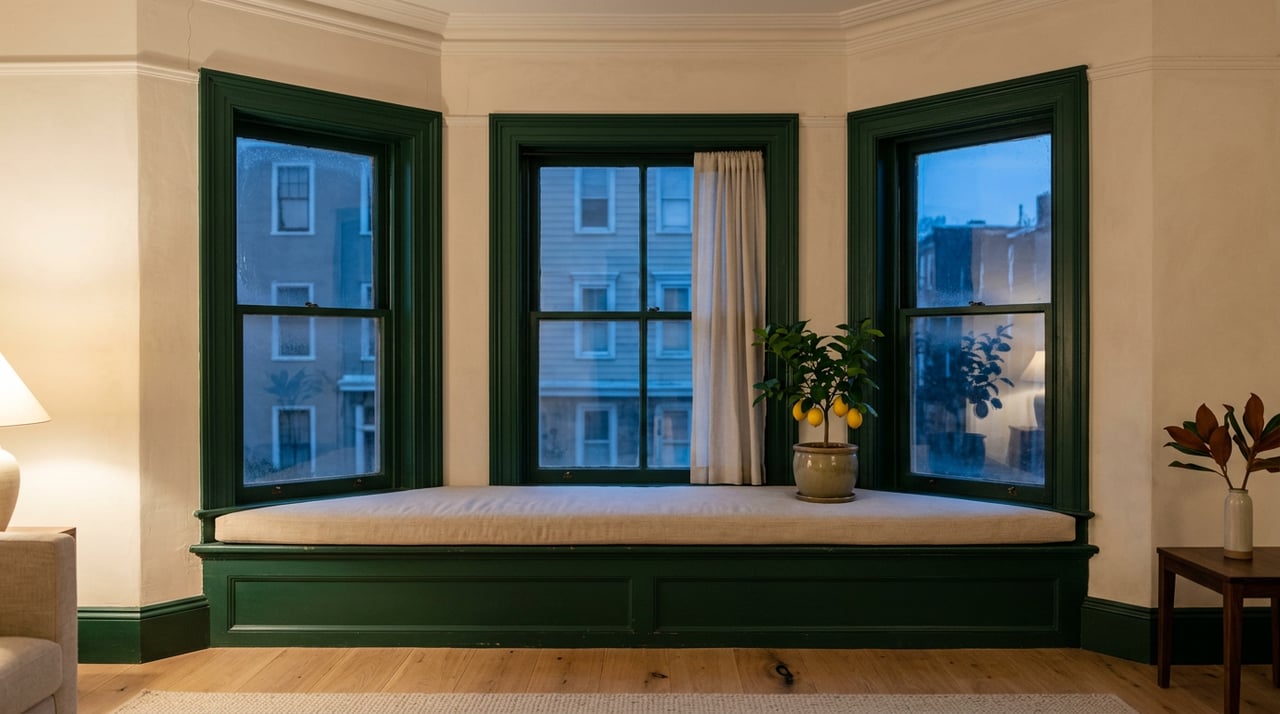
The barricades came down within a day. By the following Tuesday, the crews that had spent the July 4th weekend fencing off twelve blocks of Fillmore Street were gone, the folding chairs stacked somewhere, and the corner of Fillmore and Sutter looked like it does most weeks: a line at DON DON for takeout sushi, a hostess at Copra checking a reservation on her tablet, a couple splitting a pizza three blocks down. The festival maps were gone, and the street had returned to its familiar rhythm.
That quiet return to normal is worth pausing on. Fillmore Street's character is visible not only during the summer festival, but also in restaurant rankings and in a piano lounge that's been playing jazz on this block since before many of its current regulars moved to the neighborhood.
The Fillmore Jazz Festival ran July 4 and 5 this year, its usual footprint of twelve blocks from Jackson down to Eddy. The city closed Fillmore between Eddy and Jackson, plus stretches of Washington and Post between Webster and Steiner, from 2 a.m. Saturday until nearly midnight Sunday, according to the SFMTA's own service-change notice. Three stages carried the weekend, each named for a different jazz figure, and the event drew more than 50,000 people over the two days, per SF Funcheap's rundown of this year's lineup. Twenty-five food vendors worked those blocks alongside more than 140 arts and craft booths.
The New Fillmore, the neighborhood's own paper, ran a Street Talk column the weekend of the festival noting that the party returns almost every Fourth of July, a tradition that traces back to 1986, keeping alive the memory of a corridor once known "as Fillmore Street was known during its heyday as a jazz mecca."
That's real history, and it deserves the two days it gets. But a festival, by definition, is temporary. Twenty-five food vendors serving a crowd for one weekend is a different kind of evidence than the kind that shows up in April, months before anyone starts thinking about festival dates.
In April, the San Francisco Chronicle published its 2026 Top 100 restaurant list, and two of the top five sat on Fillmore Street. The Progress, at 1525 Fillmore, landed at No. 2, described by the paper as sister to both State Bird Provisions, which came in at No. 36 on the same list, and Anchovy Bar, both practically next door, according to The New Fillmore's coverage of the ranking. Copra took No. 4, at 1700 Fillmore, where chef Srijith Gopinathan reworked a former Bank of America branch, itself once a Bank of Italy office, into a coastal Indian dining room.
Pull the thread further and the list keeps naming this stretch of the city:
Six restaurants on one ranking, all with a Fillmore Street address in their history, and none of it tied to a festival weekend. The ranking offers another view of the corridor's year-round restaurant activity.
The other proof shows up in how operators treat their own real estate. Kevin Chen ran a small sushi bar called BUBU at 2417 California Street, a block off Fillmore, and found the space too tight to seat enough tables. Instead of closing, he moved the BUBU concept into the larger NONO space at Fillmore and Sutter, combining both menus under one roof there. The vacated California Street room didn't sit empty. Chen reopened it as DON DON, a fast, takeout-focused sushi counter with just two tables inside and two more outside, open Tuesday through Sunday.
That's not a story about a business struggling. It's an operator using two nearby addresses to run two different kinds of business at once, which only makes sense if both blocks can support the traffic.
The same logic shows up further along the street. Super Duper Burger, the Bay Area fast-casual chain, is opening its 21st location at 1701 Fillmore Street, the address that used to house a Burger King. The planned location adds another business to the Fillmore Street mix.
If any single address makes the case for what the street does on an ordinary Wednesday, it's Sheba Piano Lounge, at 1419 Fillmore and O'Farrell, inside the historic Fillmore Jazz District. Owners Netsanet and Israel Alemayehu have run the room since 2006, and its current listed hours show live music five nights a week, Wednesday through Sunday, no cover charge, alongside an Ethiopian and Mediterranean menu built around a fireplace and a wall modeled on the rock-cut church of Bet Giorgis in Lalibela.
Sheba's live music most nights of the week gives the street a regular musical presence beyond the festival weekend. The lounge has been part of the neighborhood's musical life for close to twenty years.
Put the pieces next to each other and the pattern is hard to miss. A national chain plans a location at a former fast-food corner. A local sushi operator expands into two addresses instead of one. A ranking system with no connection to any festival calendar puts two Fillmore Street kitchens in the citywide top five. A piano lounge keeps its stage lit most nights of the year, festival or not.
Taken together, these examples show that the festival is one part of Fillmore Street's story. Its restaurants and music venues offer another view of the corridor throughout the year.
If you've lived near Fillmore Street long enough to remember when the food conversation ran the other way, you already know how this kind of shift shows up in the details before it shows up anywhere else. Sage Real Estate spends its time paying attention to exactly that kind of change, block by block, across San Francisco's districts. If you're curious what a corridor like this means for what your home could be worth right now, discover what your home is worth.
Stay up to date on the latest real estate trends.
You’ve got questions and we can’t wait to answer them.